Supporting women’s health at work:
a review of evidence
Download the guide


Across the UK, millions of women navigate pregnancy, postnatal return to work, and menopause while working. Research shows that women experiencing reproductive health-related symptoms frequently report fatigue, pain, mental health strain, or stigma. These issues can negatively influence women’s job satisfaction, career progression, and wellbeing, as well as organisations’ ability to retain high performing top talent.
Employers increasingly recognise that without evidence-based guidance, well-intentioned policies can fall short or fail to translate into meaningful day-to-day support. Yet workplaces often lack the structures and evidence-based knowledge to support women effectively. Employers still face key questions including:
Our project set out to answer these questions with evidence — not assumptions.
Supporting women’s health at work is not only a matter of fairness and wellbeing; it is a workforce sustainability issue. Workplaces that provide informed and evidence-based support can:
We undertook a comprehensive research programme to understand what successful workplace support for women’s health looks like across pregnancy, postnatal return, and menopause. Our project:
Our findings show the specific challenges women face, the conditions that enable effective support, and the interventions most likely to make a meaningful difference.


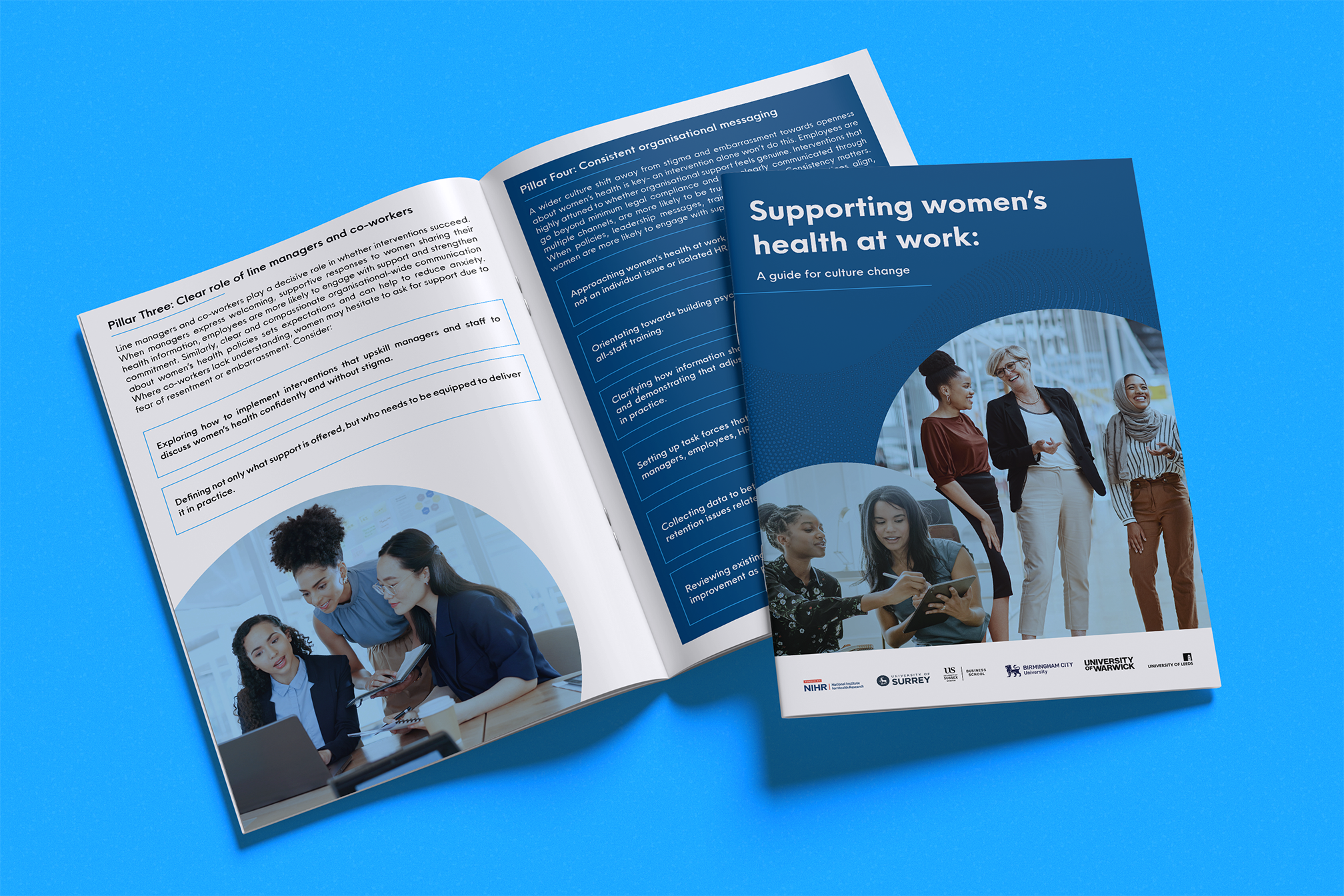
Drawing on this research, we have created a clear, actionable resource for organisations seeking to strengthen their approach to women’s reproductive health. The guide provides:
Our goal is simple: equip employers with the understanding and confidence needed to create workplaces where women feel valued, supported, and able to thrive.
Download the guide
University of Surrey

University of Sussex

University of Surrey

University of Surrey

Birmingham City University

University of Leeds

University of Warwick

University of Warwick
Project leads: Dr Ruth Abrams (University of Surrey) and Dr Lilith Whiley (University of Sussex).
This project is funded by NIHR PHR, Award number: 159142. The views expressed are those of the author(s) and not necessarily those of the NIHR or the Department of Health and Social Care.